Thursday, February 26, 2009
Oregon Trail
What are the three most important things that students should know about the Oregon Trail?Why are those things important?

Saturday, February 14, 2009
Two Views of the Alamo

The Battle of the Alamo was took place between February 23 and March 6, 1836. It became the most famous battle of the Texas Revolution. Eyewitnesses report that between 182 - 252 Texans were killed, there were no survivors among the defenders, except for Joe, who had been a slave of one of the Texans. The women and children of the Texans were released. Estimates of the killed and wounded in the Mexican army are estimated at 400-600.
Who was to blame for all of this bloodshed? You have read primary source documents written by Colonel Travis, the commander of the Texans, and General Santa Anna, commander of the Mexican army. Answer the questions below:
1. Summarize the main ideas of Colonel Travis' letter.
2. Summarize the main idea of General Santa Anna's letter.
3. Was Travis or Santa Anna more to blame for the deaths that occurred? Why?
4. Look at the dates on the two letters. Colonel Travis' letter was written during the battle, while General Santa Anna's letter was written many years later. Do you think that makes one source more believable or reliable than the other? Why or why not?
(General Santa Anna's letter, above, right)
Wednesday, February 11, 2009
John Locke & E-mail
1. What did you learn about John Locke's ideas?
2. What did you learn to do today with email?
Wednesday, February 4, 2009
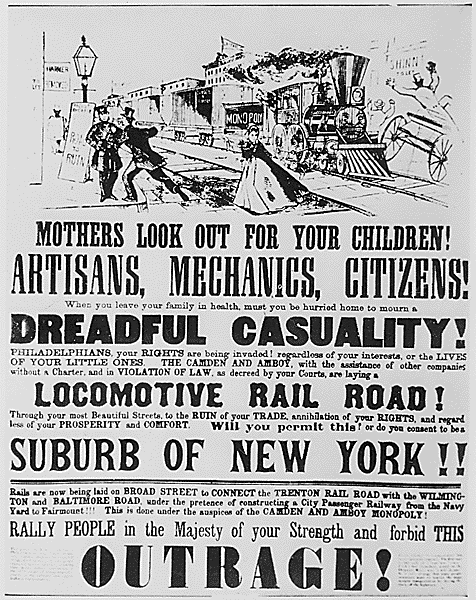
Railroads: Good or Evil?

While railroads helped the United States become more prosperous in the first half of the 19th century, there are two sides to every story. Study the poster from the National Archives, and answer the following questions:
1. What is happening in the picture? Describe all the people, things and actions taking place
2. Who is the intended audience for the poster? What makes you think that?
3. What is the message that the poster is trying to tell to the viewer?
Tuesday, February 3, 2009
Netiquette
Go to the link about netiquette, and post your responses to these three questions:
1. Where there any rules of netiquette that you did not know about? If so, which one(s)?
2. Which rule of netiquette do you think is the most important? Why?
3. If you had to add one rule to this list, what rule would it be and why?
4. Based on what you know, write a dictionary definition of netiquette.
1. Where there any rules of netiquette that you did not know about? If so, which one(s)?
2. Which rule of netiquette do you think is the most important? Why?
3. If you had to add one rule to this list, what rule would it be and why?
4. Based on what you know, write a dictionary definition of netiquette.
Tuesday, January 27, 2009
Cherokee Nation in the 1820s

John Ross (pictured to the right) and Major Ridge were Cherokee leaders who felt that the best way for the Cherokee nation to remain independent and strong was to adopt parts of white culture. Click on the link to find out more about these leaders, and respond to the following two prompts:
1. Why do you think that many of the Cherokee opposed the ideas of Ross and Ridge. If you had been a Cherokee in the 1820s, which side would you have been on, and why?
2. Why do you think John Ross, who was only one-eighth Cherokee and raised and educated in the white community, might have felt so strongly about his Indian heritage?
Wednesday, January 14, 2009
Who really invented the cotton gin?

As you know, every history book says that Eli Whitney "invented" the cotton gin. And while it is true that Whitney received the patent for the cotton gin, your research from the Smithsonian Institution showed the real story about the cotton gin's invention might not be so simple. So, who really invented the cotton gin?
Subscribe to:
Posts (Atom)